German B1 test for citizenship: which certificate counts?
Redaktion · 1 October 2026 · 6 min read
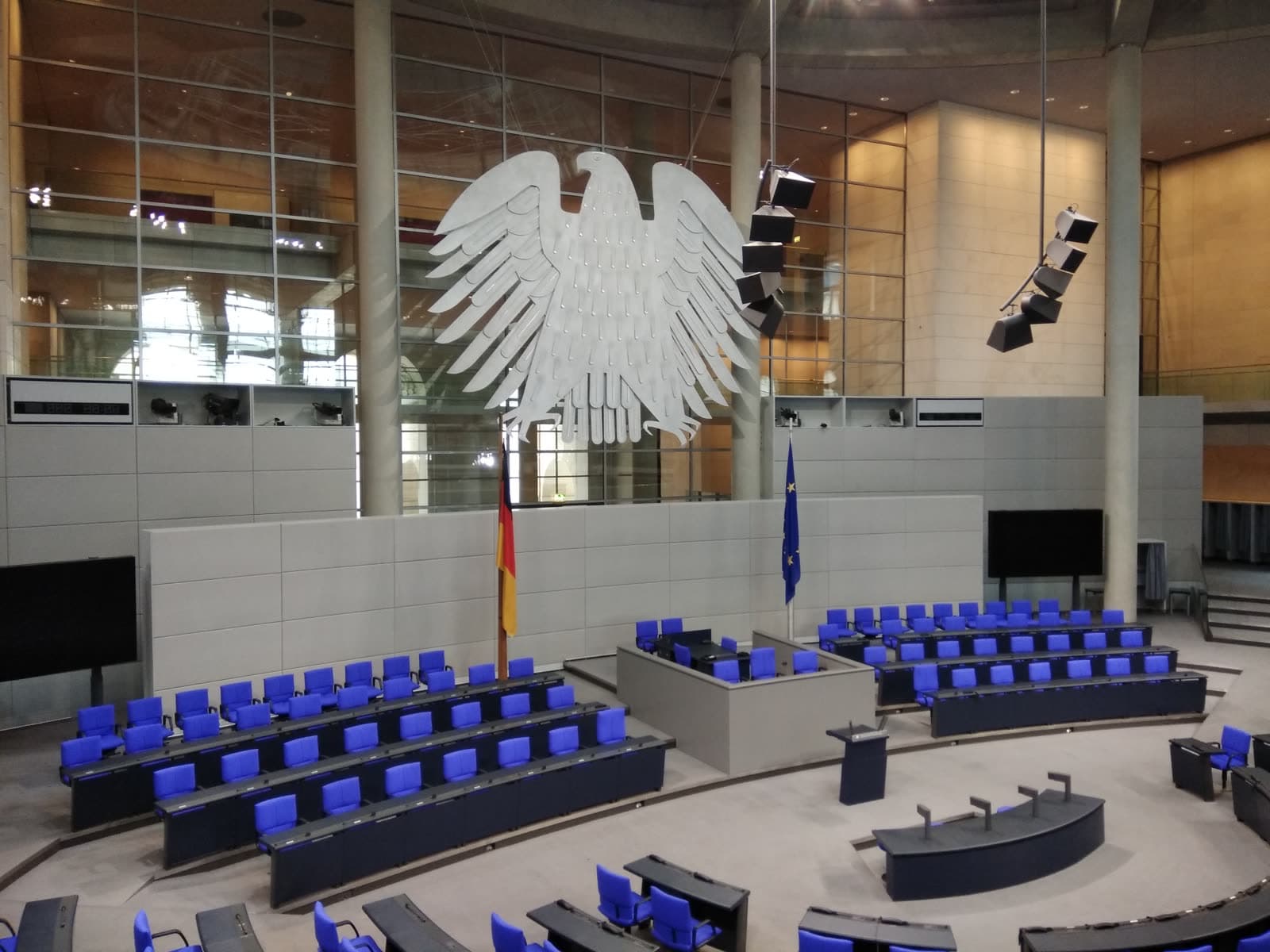
Photo: Bodhisattwa, CC BY-SA 4.0, Wikimedia Commons
In short
For German citizenship you need German at level B1, spoken and written (section 10 of the Nationality Act). The law does not name a test provider. The usual proofs are the Deutsch-Test für Zuwanderer with a B1 result, telc Deutsch B1 and the Goethe-Zertifikat B1, safest with all four modules. A German school certificate can also count. Your local naturalisation office decides what it accepts.
What level of German is required for citizenship?
Section 10 of the German Nationality Act (Staatsangehörigkeitsgesetz, StAG) requires, among other things, five years of lawful residence in Germany, sufficient German and knowledge of the legal and social order. Sufficient means you meet the requirements of a language exam at level B1 of the Common European Framework of Reference (CEFR), both spoken and written.
The law does not name a provider. The level counts, not the logo on the certificate. Children under 16 only need age-appropriate German. People who cannot reach B1 because of illness, disability or age are exempt (section 10(6) StAG).
Which certificates do naturalisation offices accept?
There is no single national list for applicants; each naturalisation office (Einbürgerungsbehörde) publishes its own. Two examples from Baden-Württemberg, the city of Karlsruhe and the district of Ludwigsburg, list almost the same proofs:
| Proof | What it must show |
|---|---|
| Deutsch-Test für Zuwanderer (DTZ) | B1 on the certificate (A2 is not enough) |
| telc Deutsch B1 (Zertifikat Deutsch) | passed: 60 percent in the written and in the oral part |
| An equal or higher language certificate | for example Zertifikat Deutsch für den Beruf, TestDaF, DSH |
| German-language school | four years with promotion each year, or promotion into year 10 |
| German school leaving certificate | Hauptschulabschluss or an equivalent German certificate |
| Study or training in Germany | a completed German-language degree or German vocational training |
Both leaflets say "for example" and "equivalent". The ÖSD Zertifikat B1 and the older ZDÖ B1 exam from Austria are not named on either list. If you hold one of them or plan to take one, ask your office before you register.
Does the DTZ count for German citizenship?
Yes, if the certificate says B1. The Federal Office for Migration and Refugees (BAMF) states this directly. The DTZ is the final exam of the integration course in Germany, and it works differently from other exams: there is no single pass mark. Three part results decide whether you get an A2 certificate, a B1 certificate or none.
| DTZ part | Maximum points | B1 from | A2 from |
|---|---|---|---|
| Listening and reading (combined) | 45 | 33 | 20 |
| Writing | 20 | 15 | 7 |
| Speaking | 100 | 75 | 35 |
You get B1 on the certificate if you reach B1 in speaking and in at least one of the other two parts. So B1 in speaking plus B1 in listening and reading gives a B1 certificate, even if your writing was only A2. If your speaking is below A2, you get no certificate at all.
telc B1 or Goethe B1: one exam or four modules?
| telc Deutsch B1 | Goethe-Zertifikat B1 | |
|---|---|---|
| Structure | a written part (225 points) and an oral part (75 points) | four modules: Lesen (reading), Hören (listening), Schreiben (writing), Sprechen (speaking), 100 points each |
| Pass mark | 60 percent in each part: 135 written and 45 oral | 60 out of 100 in each module |
| What you hand in | the certificate; it covers spoken and written German | module certificates that show spoken and written German; safest with all four |
With the Goethe-Zertifikat B1 you can take and retake each module on its own. For citizenship this matters: a certificate for the speaking module alone shows your spoken German but not your written German. If you only hold some modules, ask your office which ones it needs.
Is a certificate always enough? A 2026 court ruling
Not always. On 20 March 2026 the Bavarian Higher Administrative Court (VGH München, file 5 ZB 23.2060) decided the case of a man who had a DTZ with a B1 result (listening and reading A2, writing and speaking B1). At the naturalisation office he was asked to write ten sentences about his home country on the spot. The court sided with the office. In its words, a B1 certificate from a certified language school has "zumindest gewichtige Indizwirkung": it is at least strong evidence, but not full proof.
If there are serious doubts, the office may check your German itself. The Karlsruhe leaflet also accepts an older certificate only if you still have the language skills. In practice: keep your German active until your appointment, especially speaking.
Can you still get German citizenship after three years?
No. The Bundestag abolished the three-year route on 8 October 2025 (printed paper 21/537, 450 votes for, 134 against, 2 abstentions). That route required German at C1. The rule is now deleted from the law (section 10(3) StAG reads "weggefallen", repealed). The standard is five years of residence and B1.
Language certificate and citizenship test: two separate proofs
The B1 certificate does not replace the citizenship test (Einbürgerungstest), which checks your knowledge of Germany. According to the BAMF, the "Leben in Deutschland" test from the integration course also counts for that, if you scored at least 17 out of 33. Our article on the telc B1 Sprachbausteine helps if you choose the telc exam.
What to do next
- Read the leaflet of your naturalisation office, or ask it which proofs it accepts.
- Check whether you already have a proof: German school, training, a degree or an earlier certificate.
- If not, choose an exam: the DTZ in the integration course, telc Deutsch B1 or the Goethe-Zertifikat B1.
- Practise under real exam timing, for example the Deutsch-Test für Zuwanderer, telc Deutsch B1 or the Goethe-Zertifikat B1.
- Keep speaking German after the exam. The office may test your German in conversation.
Frequently asked questions
Which German B1 certificate is accepted for citizenship?
The law does not name a provider; it asks for German at level B1, spoken and written. The usual proofs are the Deutsch-Test für Zuwanderer with a B1 result, telc Deutsch B1 and the Goethe-Zertifikat B1. Your naturalisation office decides what it accepts.
Does the DTZ count for German citizenship?
Yes, if the result on the certificate is B1. A DTZ with an A2 result is not enough for citizenship.
Do I need all four Goethe B1 modules for citizenship?
The law asks for B1 in spoken and written German, and a single module shows only part of that. All four modules are the safest choice; with fewer, ask your office first.
How long is a B1 certificate valid for citizenship?
Section 10 of the Nationality Act sets no time limit. But offices accept an older certificate only if you still speak German at that level, and may check it themselves if they have serious doubts.
Can I get German citizenship after three years with C1?
No. The Bundestag abolished the three-year route on 8 October 2025. The standard is five years of residence and German at B1.
Do I need a B1 certificate if I went to school in Germany?
Usually not. A Hauptschulabschluss, four successful years at a German-language school or promotion into year 10 count as proof at offices such as the city of Karlsruhe. Ask your own office.
Sources
- German Nationality Act (Staatsangehörigkeitsgesetz), section 10, checked 1 October 2026
- BAMF: Einbürgerung in Deutschland, checked 1 October 2026
- German Bundestag: three-year naturalisation abolished (text archive 2025, week 41), checked 1 October 2026
- VGH München, decision of 20 March 2026, 5 ZB 23.2060, checked 1 October 2026
- City of Karlsruhe: Einbürgerung Merkblatt 1, proof of language skills (PDF), checked 1 October 2026
- Ludwigsburg district: information on language skills for naturalisation (PDF), checked 1 October 2026
- Klett-Langenscheidt: Modelltest Deutsch-Test für Zuwanderer A2/B1 (PDF), checked 5 August 2026
- telc gGmbH: telc Deutsch B1, Übungstest 1 (PDF), checked 27 August 2026
- Goethe-Institut: Goethe-Zertifikat B1, Modellsatz Erwachsene (PDF), checked 3 August 2026